Do not force the door open or closed. Springs, cables, and bottom brackets can be under extreme tension.
Call for Service Right Away: 702-373-7890Use this checklist to spot garage door safety concerns, understand what you can safely inspect from a distance, and know when it is time to stop using the door and schedule professional service.
This page is written for Las Vegas Valley homes, where heat, dust, and daily garage door use can add wear to springs, cables, rollers, hinges, openers, seals, and safety sensors.
Garage door springs help carry the weight of the door. When a spring breaks or loses proper tension, the door may become too heavy or unstable to use safely.
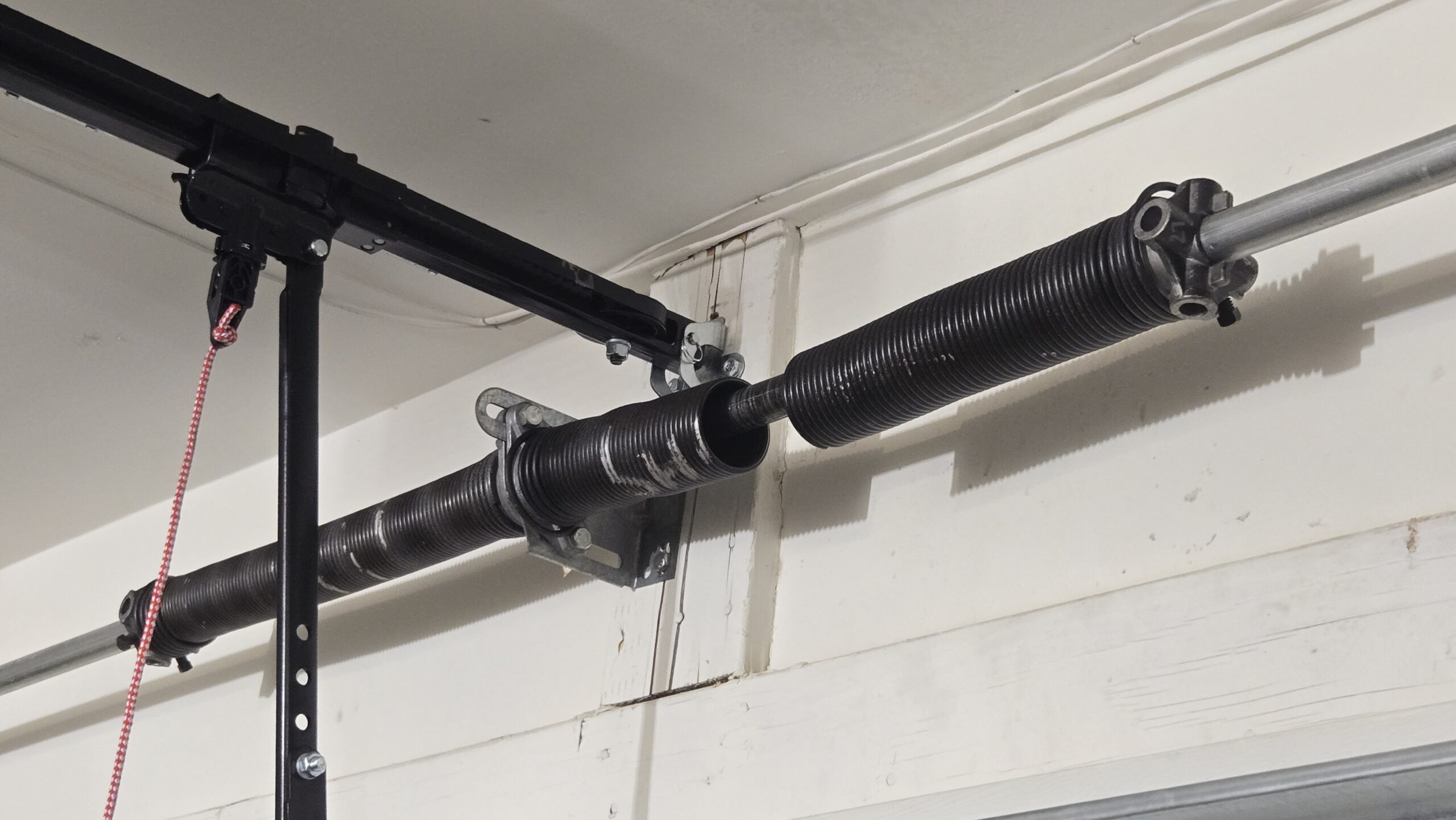
A spring that looks separated, damaged, or out of place should be treated as a safety issue. Do not try to lift the door with the opener if you suspect a spring problem.
Learn more about garage door spring replacement.
Garage door cables and bottom brackets are connected to the spring system. These parts can be dangerous when damaged, loose, frayed, or handled incorrectly.
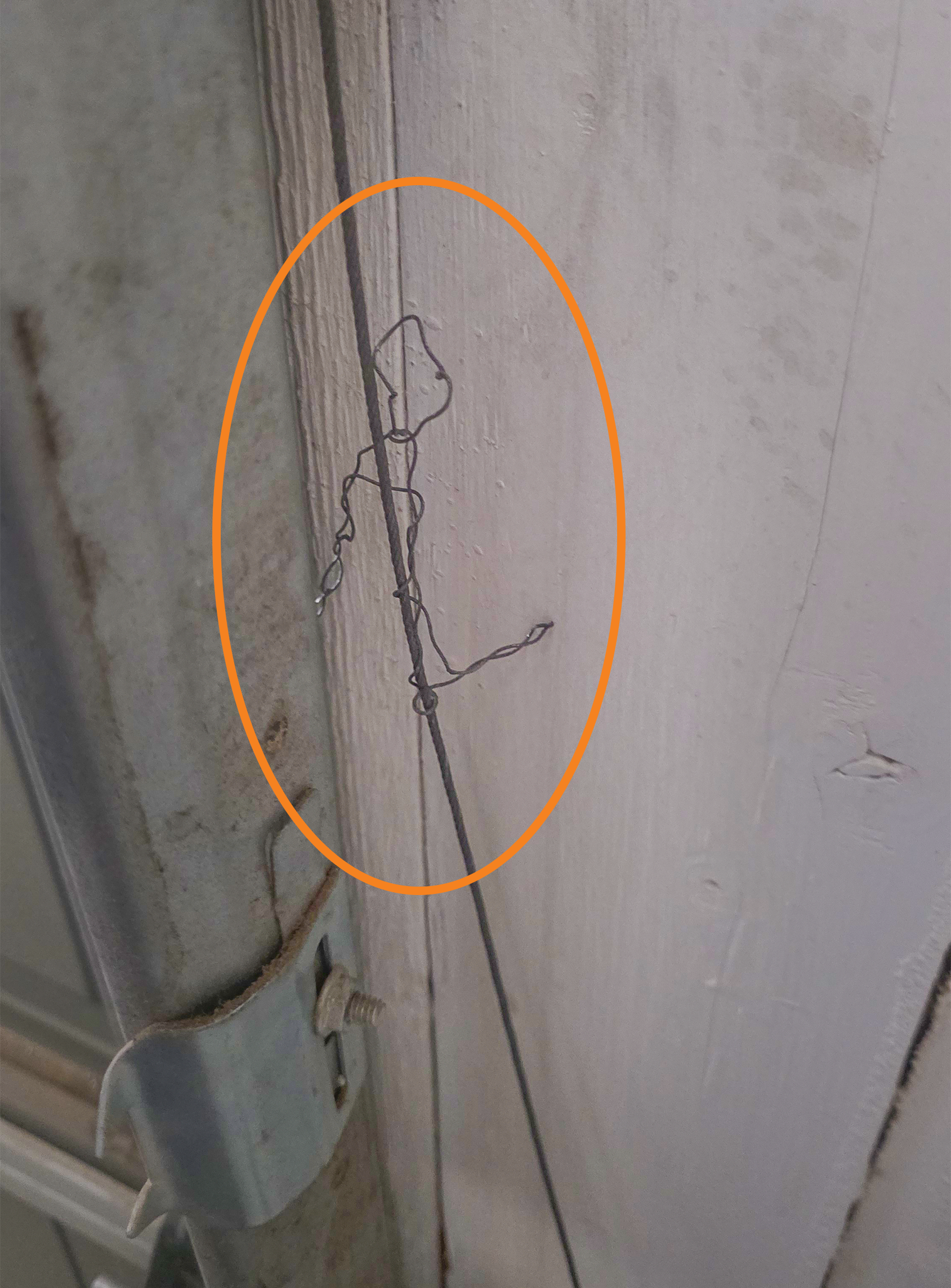
Frayed cable strands are a serious safety concern. Do not touch the cable or keep using the door if the strands are worn or breaking.
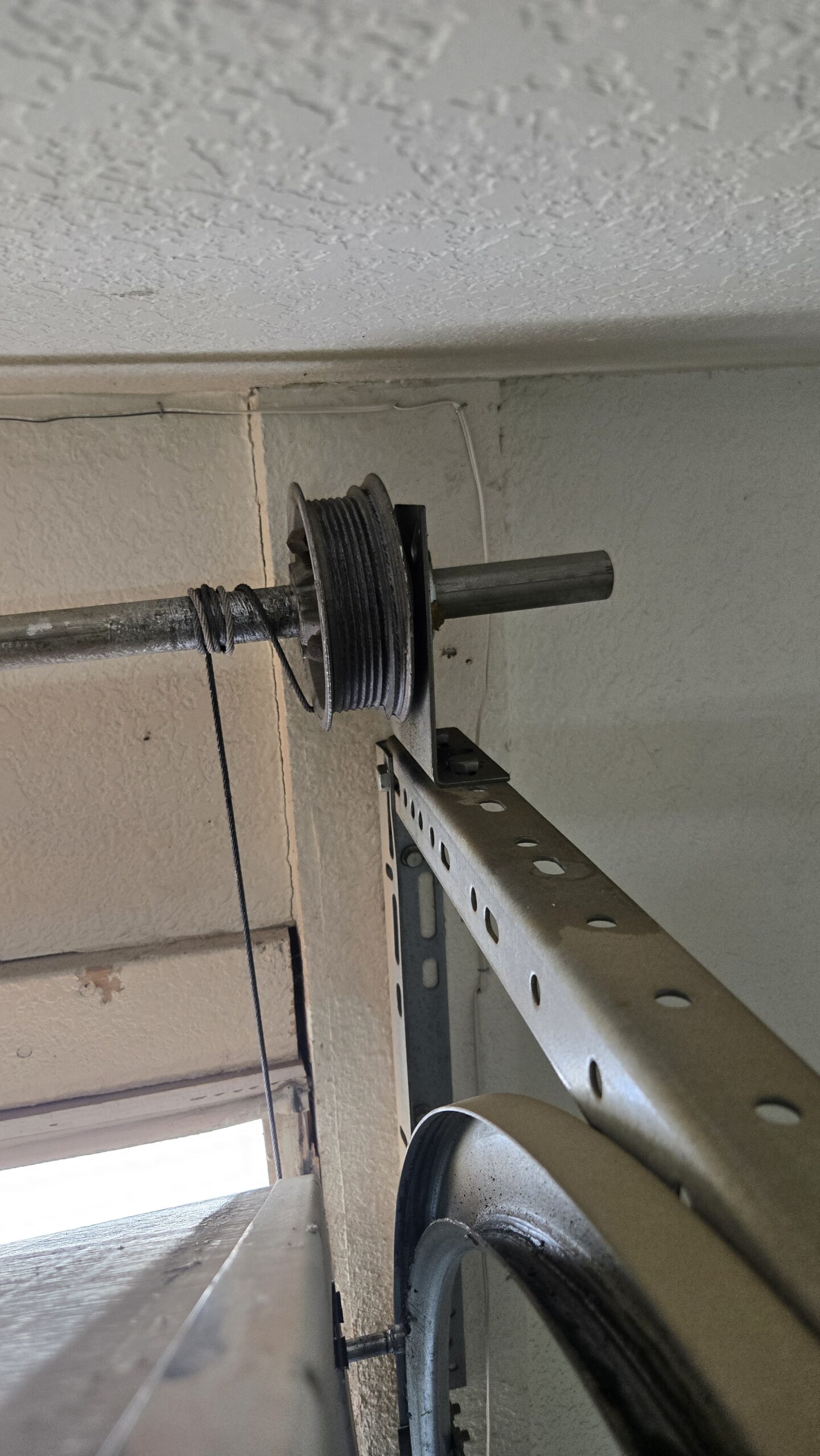
The cable drum and upper cable area are part of the lift system. If something looks loose, tangled, or out of place, stop using the door.
Do not touch, loosen, or remove bottom brackets or cables. If something looks wrong in this area, schedule service.
Tracks, rollers, and hinges guide the door as it moves. If these parts are bent, cracked, loose, or out of place, the door can bind, jam, or come off track.
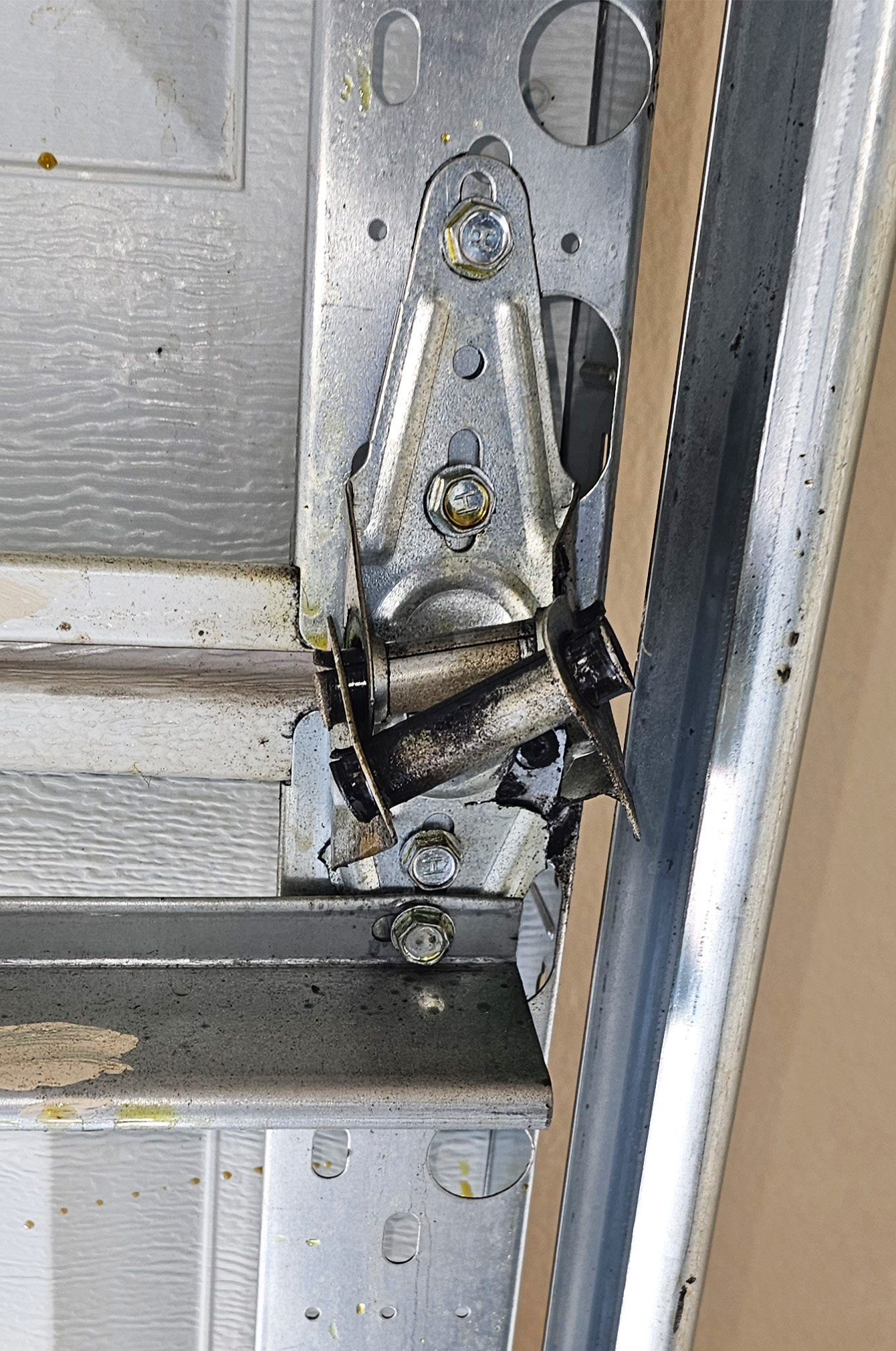
A broken or loose garage door hinge can cause the door to bind, shake, or move unevenly.
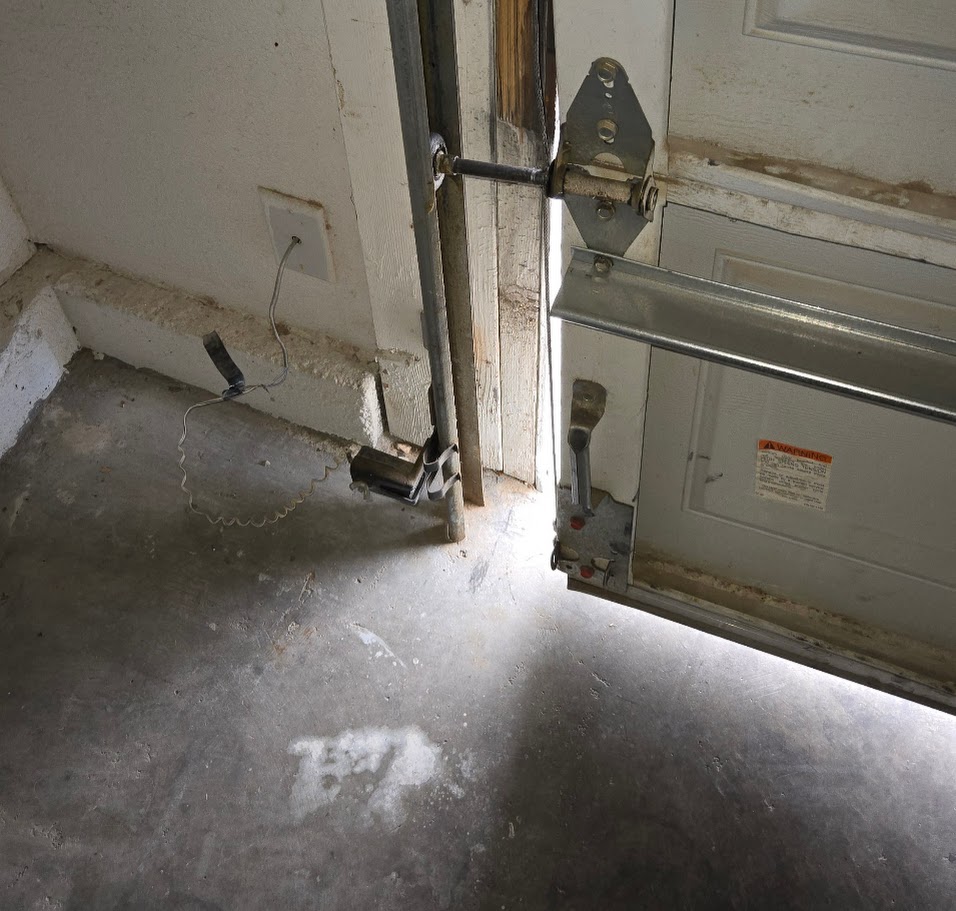
A roller out of the track can cause the garage door to bind, jam, or move unevenly.

A garage door that is off track or out of position should be repaired before the door is used again.
For more problem-specific examples, visit Common Garage Door Issues.
The opener should not force a stuck, broken, or heavy garage door to move. If the opener strains, hums, or keeps pushing against resistance, stop using it.

Opener strain, worn drive parts, or visible debris can point to a larger door or opener problem. The opener should not be used to force a damaged or heavy door.
For opener information, visit Choose Your LiftMaster Garage Door Opener.
Photo-eye sensors help prevent the garage door from closing on a person, pet, vehicle, or object in the doorway. These sensors are usually mounted near the bottom of the tracks.

Safety sensors should be clean, aligned, securely mounted, and unobstructed. Do not bypass the sensor system to force the door closed.
A properly balanced garage door should move smoothly. If the door is too heavy, drops quickly, opens unevenly, or will not stay in place, the spring system may need professional service.

A crooked garage door should not be forced open or closed. This type of problem can put stress on the tracks, rollers, cables, and opener.
For routine visual inspection tips, visit Garage Door Care & Maintenance.
These references are provided for homeowners who want to better understand garage door safety systems, opener safety requirements, and high-tension garage door parts.
If your garage door is crooked, heavy, stuck, off track, or showing signs of spring, cable, sensor, opener, roller, track, or hinge trouble, stop using it and schedule service.
Call or Text: 702-373-7890